Impacts of an industrial deep-sea mining trial on macrofaunal biodiversity | Nature Ecology & Evolution


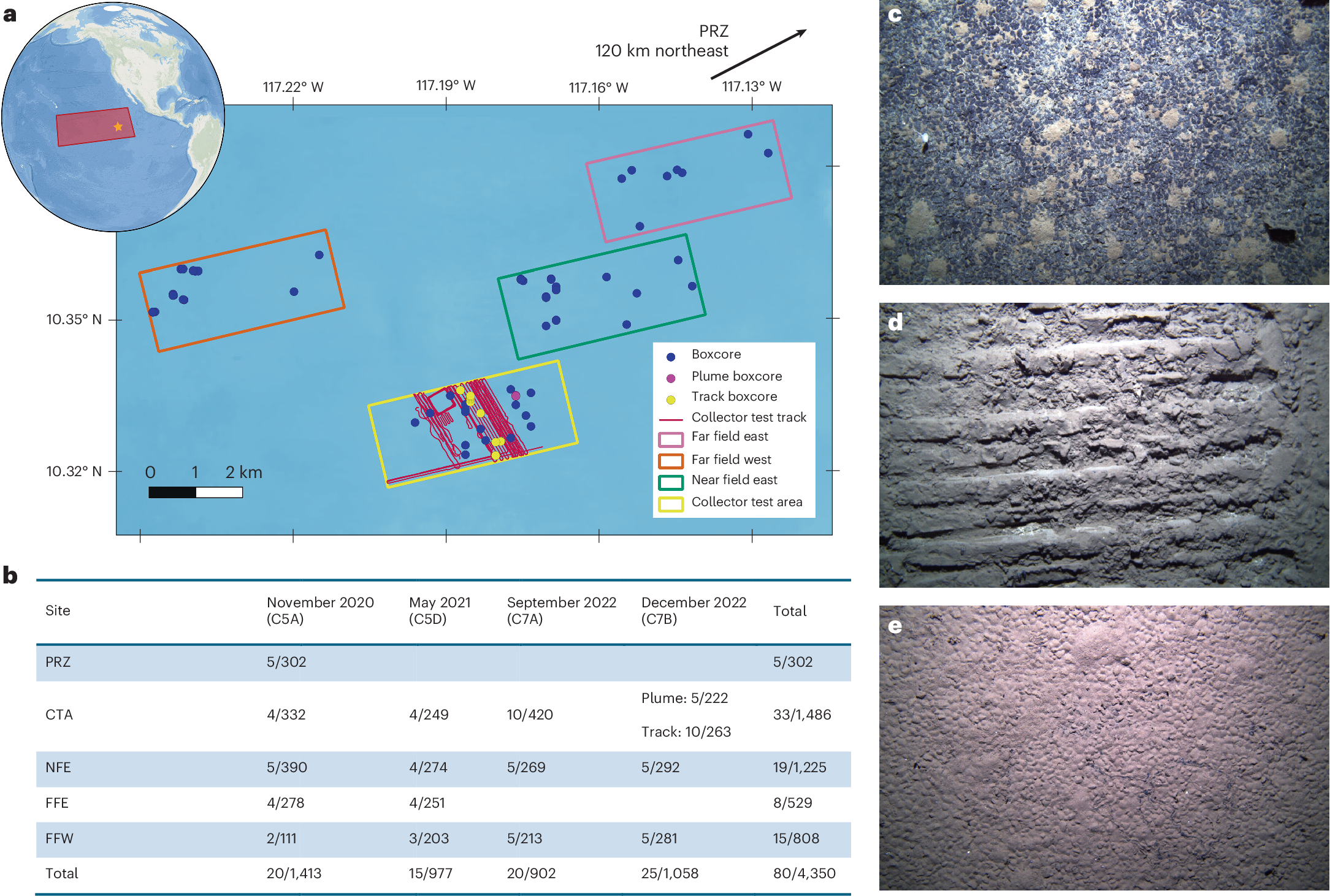
A large-scale trial of a commercial deep-sea mining machine in 2022 on an abyssal plain at 4,280 m depth extracted over 3,000 tonnes of polymetallic nodules — prompting researchers to assess the impact on sediment-dwelling macrofauna. By comparing species-level data collected for two years before and two months after the mining test, they separated mining effects from natural background variation. Within the mining tracks they observed a 37% drop in animal density and a 32% loss in species richness. Although overall diversity metrics (when adjusted for sample size) appeared stable, the structure of the community shifted: rarefaction shows many species remain undiscovered, and dominance patterns changed, hinting at long-term disruption. Meanwhile, areas impacted only by sediment plumes showed altered species dominance but no clear change in total abundance. The findings demonstrate deep-sea mining’s capacity to rapidly degrade seabed biodiversity and underscore the need for rigorous baseline and impact monitoring before commercial exploitation.
The Key points
- A 2022 deep-sea mining trial removed over 3,000 tonnes of polymetallic nodules from the ocean floor at ~4,280 m depth.
- Two-year pre-mining and two-month post-mining sampling allowed distinguishing mining impacts from natural variation.
- Within the mining tracks, macrofaunal density fell by 37%.
- Species richness dropped by about 32% inside the mined area.
- Sample-size–independent diversity metrics did not show a clear drop, masking community structure changes.
- Species dominance patterns shifted — some species declined, others became more dominant — reducing overall biodiversity.
- Regions adjacent to mining tracks but affected only by sediment plumes showed no decline in abundance, though community composition changed.
- In total, 788 macrofaunal species were identified in the study area, with many more estimated to remain undiscovered.
- The results highlight the importance of detailed, species-level baseline surveys for deep-sea environments before mining.
- The study warns that commercial-scale seabed mining could cause substantial, rapid losses of deep-sea biodiversity.
Disclaimer: This preview includes title, image, and description automatically sourced from the original website (www.nature.com) using publicly available metadata / OG tags. All rights, including copyright and content ownership, remain with the original publisher. If you are the content owner and wish to request removal, please contact us from your official email to no_reply@newspaperhunt.com.