Dark energy might be changing and so is the Universe | ScienceDaily


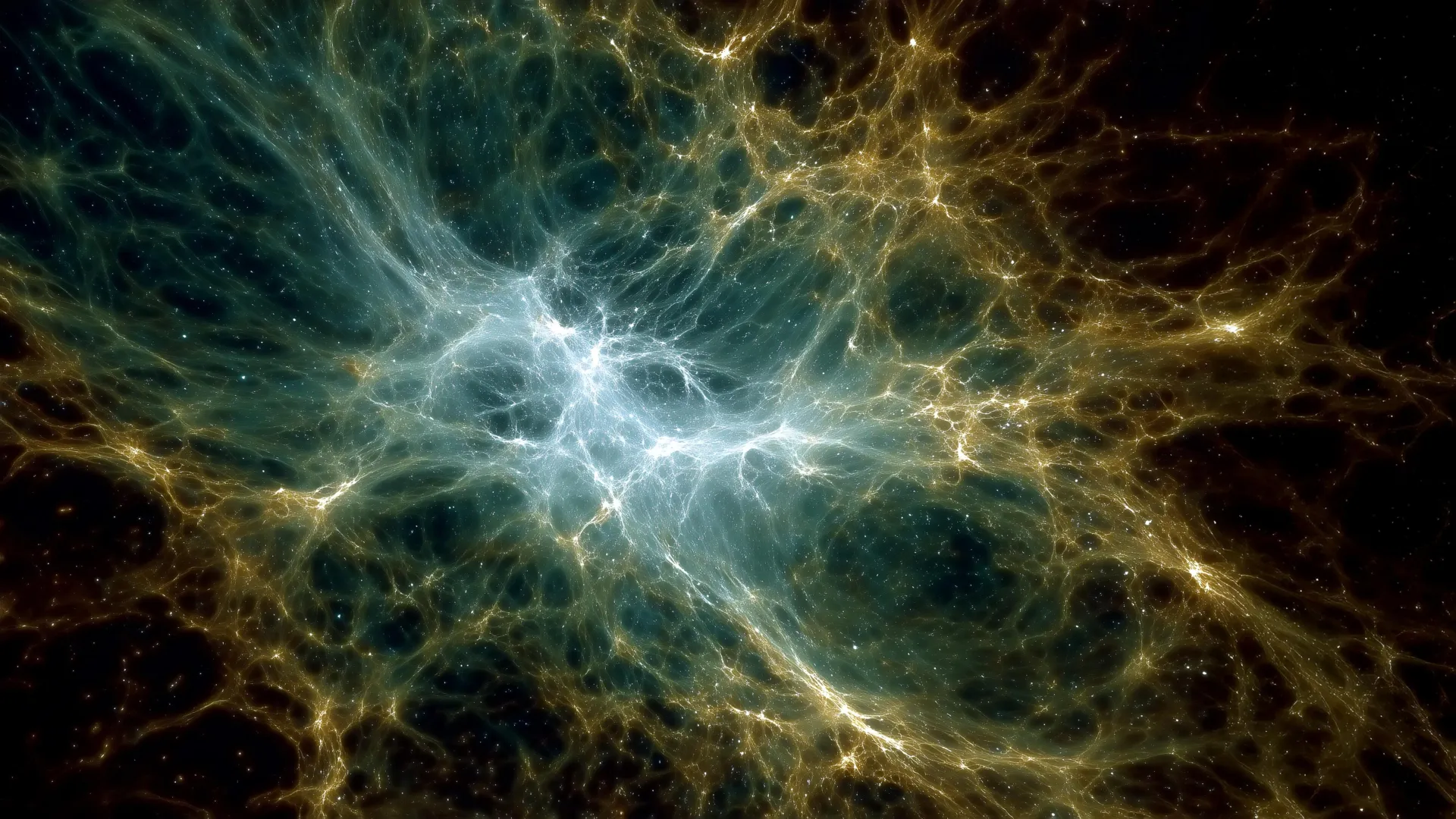
A groundbreaking simulation led by researchers at Chiba University suggests that the force known as dark energy might not be constant but could be shifting over time — and this change could dramatically impact how the Universe is structured. Traditionally, the standard cosmological model assumed dark energy remained fixed, but new observations from the Dark Energy Spectroscopic Instrument (DESI) hinted at something more dynamic. By running massive high-resolution simulations on Japan’s supercomputer Fugaku, the team compared traditional and evolving dark energy scenarios and found that when the matter density of the universe is higher, the evolving dark energy model predicts many more massive galaxy clusters in the early universe. They also found that patterns called baryonic acoustic oscillations shift in a way that matches DESI’s observations, giving strong support to this evolving dark energy framework.
The Key points
- Dark energy, long thought to be a fixed cosmic force, may actually vary with time.
- Recent DESI observations challenged the assumption of a constant dark energy.
- The simulation was one of the largest-ever cosmological models, comparing fixed and evolving dark energy scenarios.
- When matter density is increased in the evolving model, massive galaxy cluster formation is boosted by up to 70%.
- The evolving-dark-energy model reproduces the observed shift in baryonic acoustic oscillation peaks by about 3.7%.
- Small-scale galaxy clustering became notably stronger in the evolving dark energy model with higher matter density.
- The study reveals that matter density variations may influence cosmic structure formation even more than dark energy evolution alone.
- These findings provide a theoretical framework to interpret upcoming large-scale surveys like those by the Subaru Prime Focus Spectrograph.
- If dark energy is indeed dynamic, the standard ΛCDM cosmological paradigm might need revision.
- This research opens the door to a richer understanding of how the Universe’s expansion history and structure may be more complex than previously assumed.
Disclaimer: This preview includes title, image, and description automatically sourced from the original website (www.sciencedaily.com) using publicly available metadata / OG tags. All rights, including copyright and content ownership, remain with the original publisher. If you are the content owner and wish to request removal, please contact us from your official email to no_reply@newspaperhunt.com.